
In this guide
On our October 2026 estimates, a single person renting a one-bed flat without a car spends about £31,000 a year, which takes a salary of about £38,000 after Jersey tax and social security. A working couple in a two-bed flat needs about £58,200 between them, and a family of four in a three-bed house with a child at nursery about £104,500. The "£30 million" figure is a myth: the only wealth route, high value residency, looks for income well above £1.25 million and at least £250,000 of tax a year.
This page turns the figures in our cost of living guide into the salaries that pay for them. Every budget assumes you rent, because almost every newcomer does, and every salary is worked through Jersey's 2026 tax rules so you can check the sums.
Is there a minimum income or savings requirement?
Not for British or Irish citizens. You register as a resident and pay £88.15 for a registration card if your status is Standard or Licensed. There is no savings or income test.
What money changes is your housing. Without a sponsoring employer you have Standard status and can rent only Registered property. Under guidance published in November 2025, a full-time job paying at least £54,000 can come with a Licensed permission to rent Qualified homes, and £60,000 or more to rent or buy. For many people that is the salary that matters most; see housing qualifications. Other nationalities face immigration tests, covered in can I move to Jersey?.
How the salaries are worked out
- Income tax, 2026. You pay the lower of 20 per cent of income, or 26 per cent of income above the £21,250 exemption threshold after allowances. Since 1 January 2026 everyone is taxed independently, so each adult has their own threshold.
- Social security. Employees pay 6 per cent of earnings up to £6,062 a month (£72,744 a year).
- Long-term care. Up to 1.5 per cent of income, using the same allowances; people on the 26 per cent calculation pay 1.95 per cent of income above their threshold.
- Allowances. £3,950 per child, and childcare relief of up to £20,950 a year for a pre-school child, limited to what you pay.
- Assumptions. Employment income only, a full tax year, no pension contributions. Budget lines are our October 2026 planning figures from the cost of living guide, not quotes; the couple and family budgets are the guide's own.
Your first year here is taxed differently; our tax guide explains how.
A single person in a one-bed flat
| Item | Monthly | Annual |
|---|---|---|
| Rent, one-bed flat | £1,400 | £16,800 |
| Electricity, water, broadband, mobile | £230 | £2,760 |
| Groceries | £300 | £3,600 |
| Eating out and social | £300 | £3,600 |
| Buses and the odd taxi, no car | £100 | £1,200 |
| Gym, subscriptions, other | £150 | £1,800 |
| Flights home, two trips a year | £75 | £900 |
| GP visits and prescriptions | £30 | £360 |
| Total | £2,585 | £31,020 |
The rent matches gov.je's average for an advertised one-bed flat in the Registered market, about £1,400 a month in Q3 2025; that is the market open to newcomers on Standard status. Parish rates, contents insurance and saving are not included.
Salary needed: about £38,000.
| Item | Calculation | Amount |
|---|---|---|
| Income tax | Standard: 20% × £38,000 = £7,600. Marginal: 26% × (£38,000 − £21,250) = £4,355. Lower wins. | £4,355 |
| Social security | 6% × £38,000 | £2,280 |
| Long-term care | 1.95% × £16,750 | £327 |
| Take-home | £31,038 |
For context, Statistics Jersey put median full-time earnings at £930 a week in June 2026, about £48,400 a year. That takes home £37,881, leaving about £570 a month after this budget. The minimum wage has been £13.59 an hour since 1 April 2026; 40 hours a week for a year is £28,267, which takes home £24,610, or £2,051 a month. That is about £530 a month short of this budget, so on minimum wage most people share or live in lodgings. Add a car at £350 a month and the salary needed rises to about £44,350.
A couple in a two-bed flat
| Item | Monthly | Annual |
|---|---|---|
| Rent, two-bed flat in St Helier or St Clement | £2,000 | £24,000 |
| Electricity, water, broadband, mobiles | £330 | £3,960 |
| Groceries | £600 | £7,200 |
| Eating out and social | £500 | £6,000 |
| One car: fuel, insurance, parking | £350 | £4,200 |
| Gym, subscriptions, other | £200 | £2,400 |
| Flights home, two trips a year | £150 | £1,800 |
| Health costs | £60 | £720 |
| Total | £4,190 | £50,280 |
Salary needed: about £58,200 between two equal earners, or £67,150 on one salary.
| Two earners, each | One earner | |
|---|---|---|
| Salary | £29,100 | £67,150 |
| Income tax (marginal calculation) | £2,041 | £11,934 |
| Social security | £1,746 | £4,029 |
| Long-term care | £153 | £895 |
| Take-home | £25,160 (£50,320 together) | £50,292 |
One salary has to be about £9,000 higher than two together, because since 2026 each adult is taxed on their own income with their own £21,250 threshold. Gov.je says couples who married or became civil partners before 1 January 2022, have not separated and have both lived in Jersey since 2021 or earlier get a compensatory allowance automatically where needed, so check your own position. A single earner on £67,150 is also above the £60,000 level at which a job can bring Licensed status.
A family of four in a three-bed house
| Item | Monthly | Annual |
|---|---|---|
| Rent, three-bed house in St Saviour or St Brelade | £3,000 | £36,000 |
| Electricity, water, broadband, mobiles | £400 | £4,800 |
| Parish rates and insurance | £80 | £960 |
| Groceries | £1,000 | £12,000 |
| Nursery, four days a week, after funding | £1,100 | £13,200 |
| School costs at a States primary | £100 | £1,200 |
| Two cars | £550 | £6,600 |
| Eating out, activities, children's clubs | £500 | £6,000 |
| Flights home, two family trips a year | £350 | £4,200 |
| Health costs and insurance top-up | £150 | £1,800 |
| Total | £7,230 | £86,760 |
Salary needed: about £52,250 each, £104,500 together. One parent claims both child allowances (£7,900) and childcare relief on the £13,200 of nursery fees. Parents can agree how to share the child allowance, and married couples and civil partners can usually claim childcare relief only if both work.
| Parent A | Parent B, with allowances | |
|---|---|---|
| Salary | £52,250 | £52,250 |
| Income tax | 26% × £31,000 = £8,060 | 26% × £9,900 = £2,574 |
| Social security | £3,135 | £3,135 |
| Long-term care | £605 | £193 |
| Take-home | £40,450 | £46,348 |
Together that is £86,798. Without the allowances each parent would need about £56,700. If one parent stays at home, the nursery line goes, the budget falls to £73,560, and the childcare relief goes with it. A single earner claiming both child allowances then needs about £96,850: tax of £17,602 (still on the 26 per cent calculation, because the allowances lift the point where 20 per cent becomes cheaper), £4,365 social security and £1,320 long-term care leave £73,563. Swap the States primary for a fee-paying States college and the budget rises again; see schools.
Costs before your first payday
- Deposit and first month's rent. A deposit is generally one month's rent; with the first month paid in advance, allow about £2,800 for the one-bed above, £4,000 for the two-bed and £6,000 for the house.
- Registration cards. £88.15 for each adult on Standard or Licensed status.
- GP fees. Until you have lived here six months you pay the full cost, with advertised visitor prices of £85 to £100 (December 2025), against an average of £33.86 with the subsidy.
- Hospital care. Beyond the Emergency Department it is free only after six months' residence while paying social security or income tax, or twelve months if not working, unless you are Licensed. Consider insurance for the gap.
- A cushion. Income Support typically needs five years' residence, so a few months of costs in savings is prudent.
Do you need £30 million to live in Jersey?
No. No law, gov.je page or Locate Jersey criterion we checked mentions £30 million. The myth most likely grows out of high value residency, whose real thresholds are big enough to swell in the retelling. It is an optional route that gives a wealthy newcomer Entitled status, with full housing rights, from day one, and it asks for:
- worldwide earnings "well above £1.25 million" a year, guaranteed for at least ten years (gov.je);
- a minimum of £250,000 in Jersey tax a year, with 20 per cent on the first £1.25 million and 1 per cent above, and Jersey property income at 20 per cent;
- a house worth more than £3.5 million or an apartment worth more than £1.75 million;
- personal wealth of more than £10 million excluding your main home, on Locate Jersey's criteria page (last updated July 2025).
About 260 families live in Jersey through the scheme, according to gov.je. A second route introduced in 2026, the Skilled High Earner route, asks for £250,000 a year of income from your own Jersey business and property worth £2 million or more. Confirm current conditions with Locate Jersey; our can I move to Jersey? guide has more detail.
Frequently asked questions
How much money do you need to live in Jersey?
There is no minimum for British or Irish citizens. On our October 2026 estimates, a single person renting a one-bed flat without a car spends about £31,000 a year, which needs a salary of about £38,000 after Jersey tax and social security.
How much money does a couple need to live in Jersey?
A working couple renting a two-bed flat with one car spends about £50,300 a year. That takes about £29,100 each on two equal salaries, or about £67,150 on one, under 2026 tax rules.
What salary do you need to live in Jersey?
About £38,000 for a single person renting alone, £58,200 combined for a couple and £104,500 combined for a family of four with a child at nursery. A salary of £60,000 or more can also bring Licensed status, which opens up most of the housing market.
Do you need £30 million to live in Jersey?
No. That figure appears in no official rule. The optional high value residency route expects income well above £1.25 million and at least £250,000 of tax a year; ordinary movers need no minimum wealth.
Is £50,000 a good salary in Jersey?
It is above the median of about £48,400 (June 2026) and takes home £38,964, or £3,247 a month, under 2026 rules. That covers a single person's budget with about £660 a month to spare, but not a couple's on its own.
More guides



Photography in More guides
- Inside the Central Market, St Helier. Photograph: Pymouss, CC BY-SA 4.0, via Wikimedia Commons
- Royal Square, St Helier. Photograph: Danrok, CC BY-SA 3.0, via Wikimedia Commons
- A Condor ferry entering St Helier harbour, before DFDS took over the routes in 2025. Photograph: Tom Brossman, CC0 1.0, via Wikimedia Commons
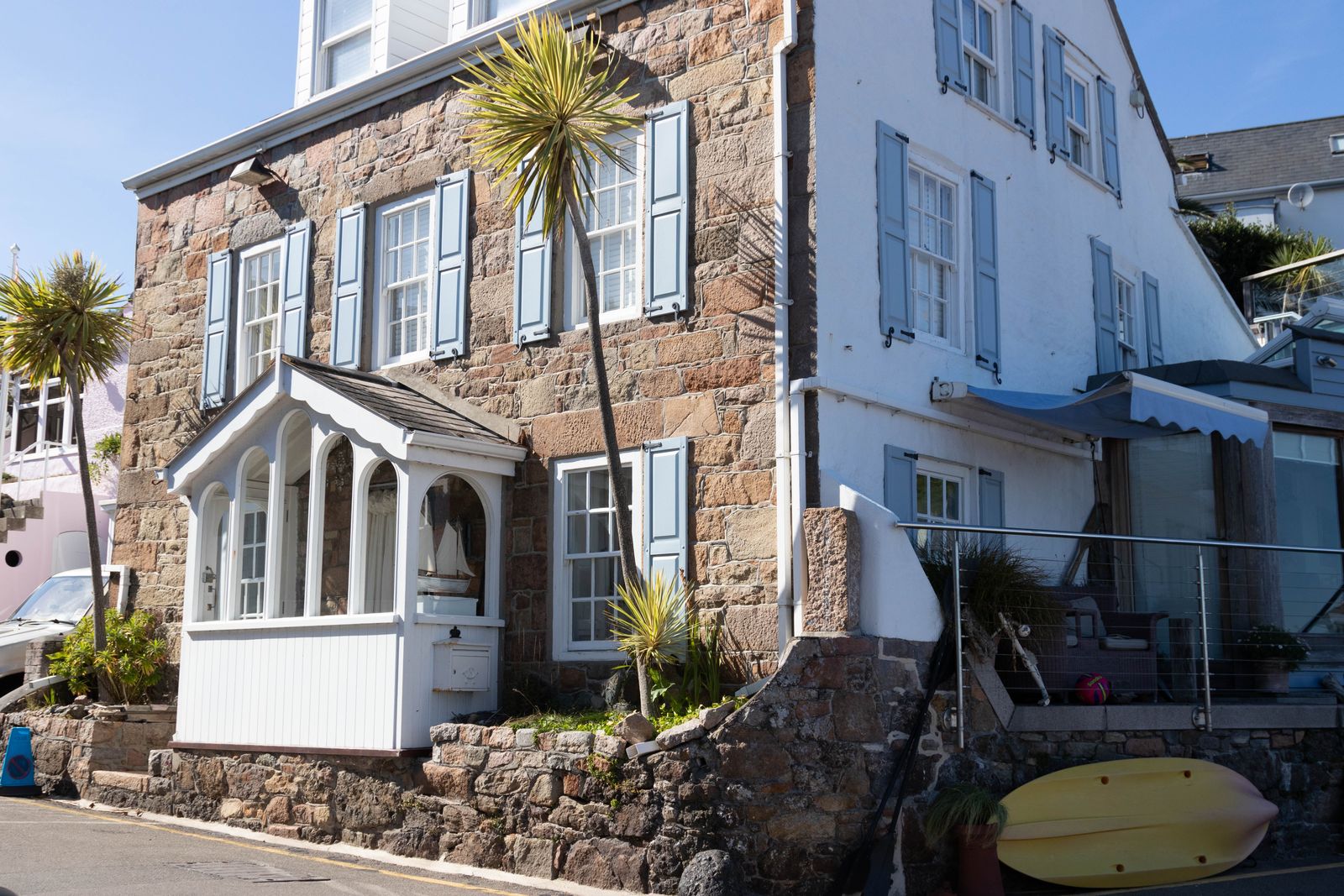
- A granite house at Rozel, St Martin. Photograph: Danrok, CC BY-SA 4.0, via Wikimedia Commons
Sources
- https://www.gov.je/TaxesMoney/IncomeTax/Individuals/AllowancesReliefs/Pages/2026TaxAllowances.aspx
- https://www.gov.je/Working/Contributions/Employers/Pages/Tables.aspx
- https://gov.je/Benefits/LongTermCareScheme/Pages/Funding.aspx
- https://www.gov.je/TaxesMoney/IncomeTax/Individuals/AllowancesReliefs/pages/childallowance.aspx
- https://www.gov.je/TaxesMoney/IncomeTax/Individuals/AllowancesReliefs/pages/childcaretaxrelief.aspx
- https://gov.je/Working/Contributions/RegistrationCards/Pages/GetRegistrationCard.aspx
- https://www.gov.je/News/2025/Pages/ControlsRelaxedForLocalBusinesses.aspx
- https://www.gov.je/LifeEvents/MovingToJersey/LivingInJersey/Pages/AccommodationRestrictions.aspx
- https://gov.je/LifeEvents/MovingToJersey/PreparingToMove/Pages/ArrangeAccommodation.aspx
- https://stats.je/news/average-earnings-index-for-june-2026-and-earnings-statistics-report-published/
- https://www.gov.je/Working/EmploymentRelations/Pages/MinimumWage.aspx
- https://www.bailiwickexpress.com/news/in-numbers-how-has-the-cost-of-a-gp-appointment-changed/
- https://www.gov.je/Health/Travelling/Pages/MovingReturning.aspx
- https://www.gov.je/LifeEvents/MovingToJersey/LivingInJersey/pages/benefits.aspx
- https://www.gov.je/Home/RentingBuying/HousingLaws/pages/highvalueresidency.aspx
- https://www.gov.je/TaxesMoney/IncomeTax/Technical/Guidelines/pages/taxinformationhighvalueresidents.aspx
- https://www.locatejersey.com/moving-to-jersey-as-a-hnwi/criteria-and-applications/
- https://www.locatejersey.com/eligibility-and-criteria-for-the-skilled-high-earner-route/